CareMetrics
Scientific measurement of the quality of treatments for the wounded and people coping with PTSD.
CareMetrics aims to build a scientific measurement system for each organization treating the wounded and people coping with PTSD in Israel, enabling it to measure the quality of the care it provides.
Tailored to each organization’s treatments, with treatment quality as the focus.
Led by Dr. Yiftach Golov
Biophysicist · Sci-AI Computational Expert · Wounded IDF Veteran
The challenge
Care for the wounded and people coping with PTSD takes many forms.
Learning needs context.
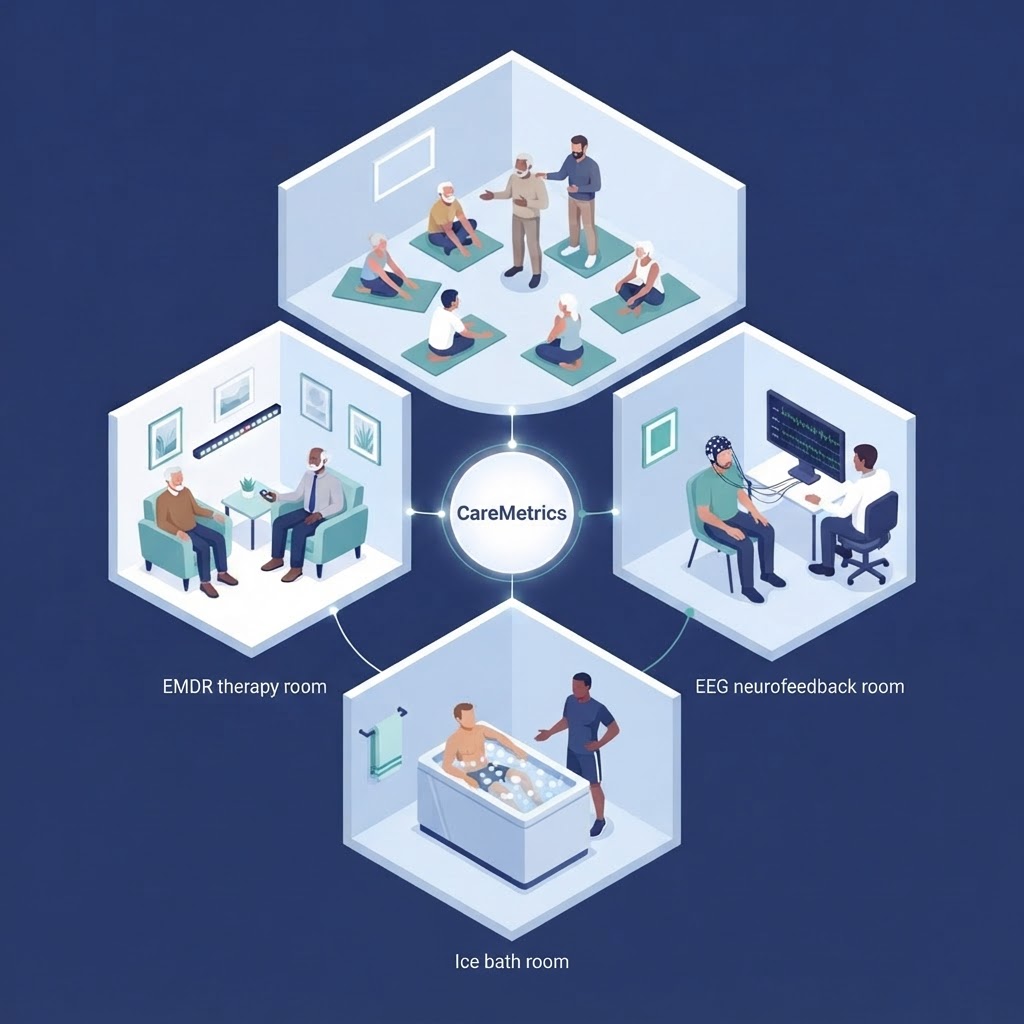
Organizations across Israel support people living with trauma through diverse approaches, from art and yoga to mind-body practices and community connection. Each organization brings its own expertise and knows the people it supports.
Yet the information teams gather may not translate easily into a clear picture of how their services are experienced or how outcomes change over time. Tools that do not fit the care setting can leave important questions unanswered.
What helps, for whom, and under which conditions?
CareMetrics aims to help organizations explore these questions without reducing recovery to a single score or losing the human relationships at the center of care.
How CareMetrics would work
Measure the quality of care for the wounded and people coping with PTSD.
A scientific measurement system for each organization providing treatment for the wounded and people coping with PTSD in Israel.
At its core: a digital hub, powered by an exclusive dedicated algorithm and an AI envelope — together creating a professional, personalized measurement tool for each organization.
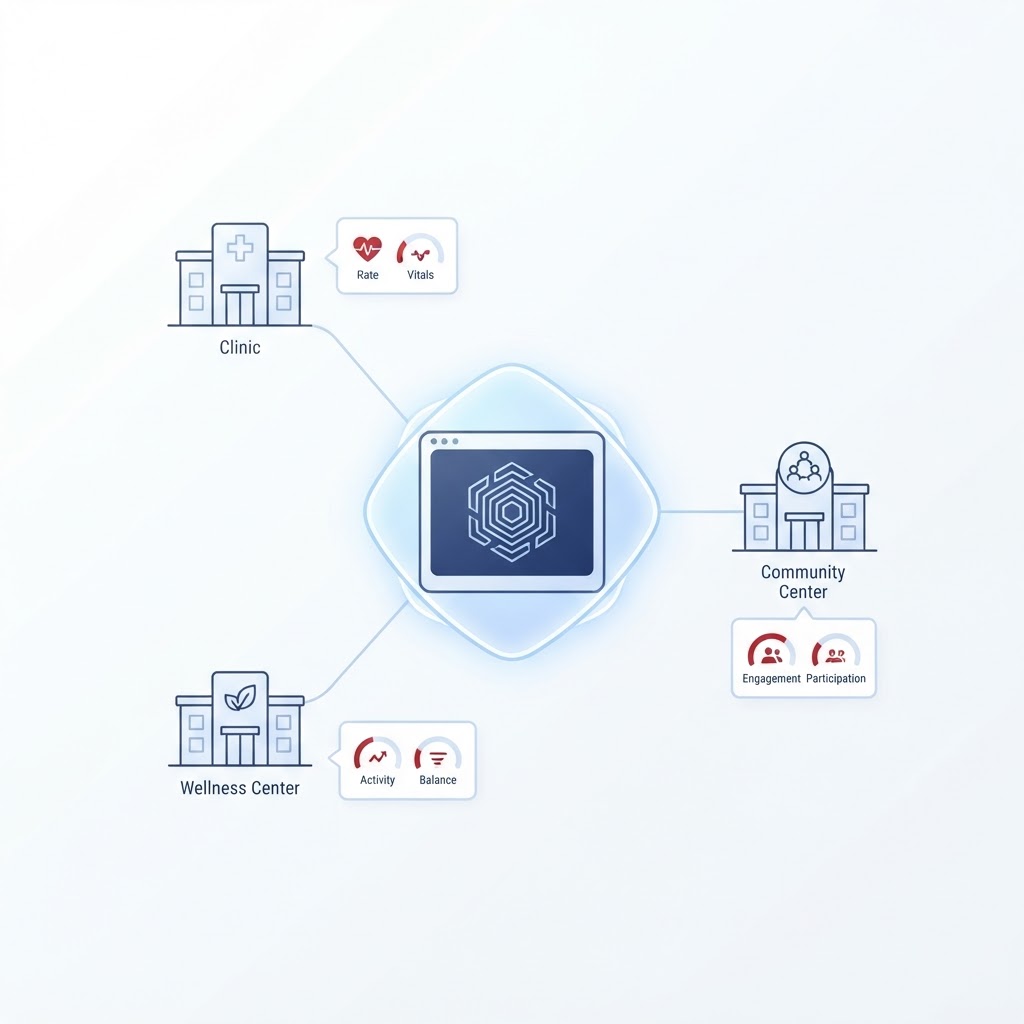
CareMetrics aims to enable organizations to scientifically measure the quality of the treatment they provide to the wounded and people coping with PTSD. Each system would be tailored to the organization’s treatments, using scientifically-grounded measures and systematic data analysis to assess quality and support improvement, alongside professional judgment.
The proposed process, in three stages
Define quality measures
Establish scientifically-grounded indicators of treatment quality, tailored to the treatments the organization provides to the wounded and people coping with PTSD.
Build the measurement system
Develop an organization-specific system to collect and analyze relevant treatment data, with appropriate consent and professional oversight.
Measure and improve
Use findings to assess treatment quality over time, identify areas for improvement, and guide professional review.
The personal & scientific journey
A personal encounter with complexity and chaos

Dr. Golov studies complex systems and how biological agents thrive under uncertainty. As a wounded IDF Special Forces veteran living with physical injuries and PTSD, uncertainty is also part of his everyday life.
Following October 7, 2023, he chose to remain in Israel rather than pursue a funded research opportunity at one of the Max Planck Institutes in Germany. He committed his computational skills, scientific knowledge, and post-military experience to trauma-related challenges.
CareMetrics carries that journey into a new question: how can scientific tools help the organizations supporting recovery learn and improve?
Scientific foundation
His background spans biological research, biophysics, and the study of complex systems at Tel Aviv University, with work across disciplinary boundaries. This scientific perspective informs his approach to uncertainty, modeling, and human-centered challenges.
From research to applied Sci-AI
Together with his co-founder, Dani Zaks, Dr. Golov leads the Sci-AI Unit at Certainty Lab. Their work focuses on computational frameworks tailored to specific domains and needs, connecting scientific principles with practical tools.
A foundation in applied work
Avner: from complex knowledge to practical guidance
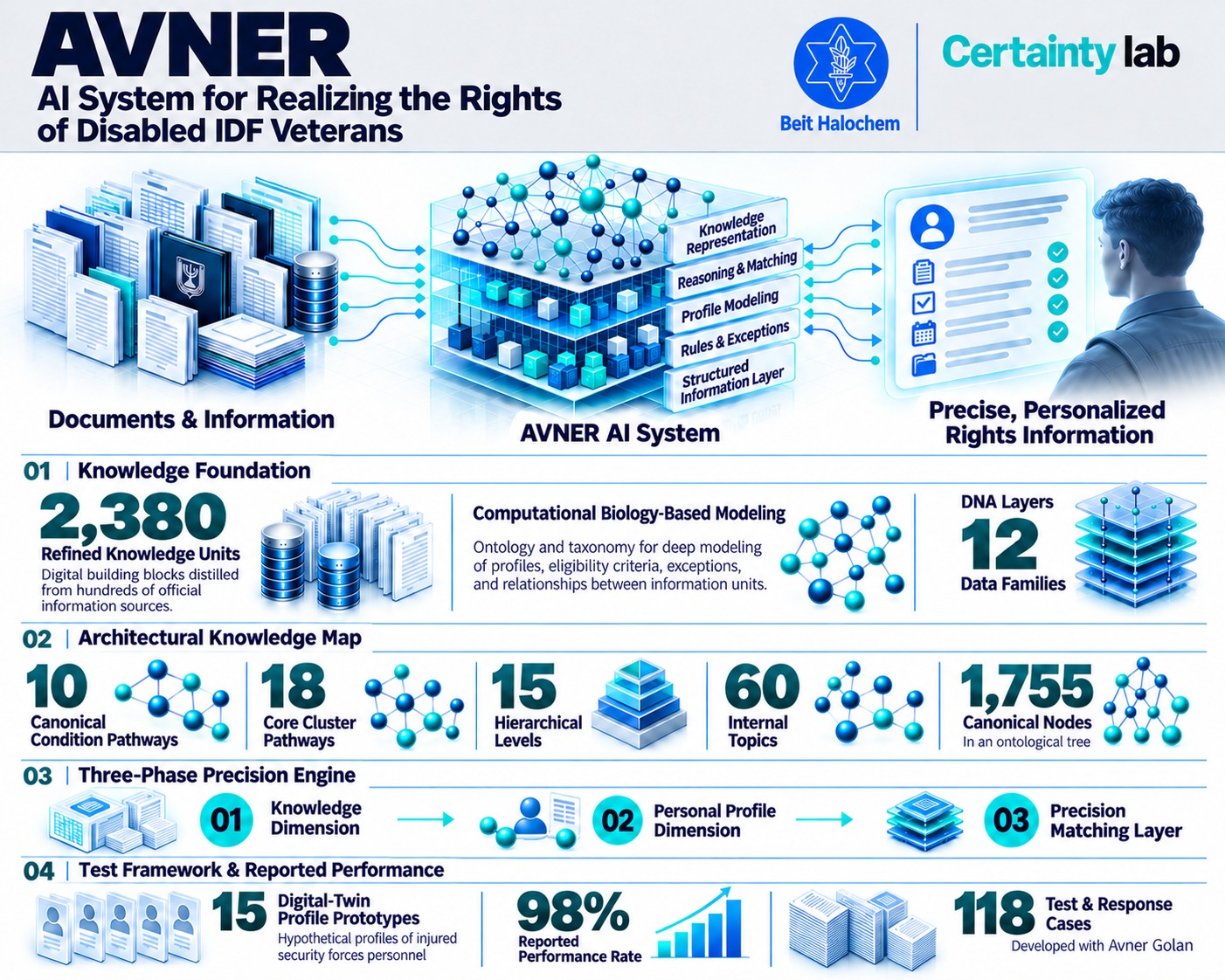
Avner is an existing computational platform developed with the IDF Disabled Veterans Organization. Dr. Golov initiated and led its scientific architecture and algorithmic core.
It helps wounded veterans identify potentially relevant rights and benefits, understand eligibility conditions, and explore practical next steps based on their circumstances.
That work illustrates a principle behind CareMetrics: domain-specific scientific and computational tools can make complex information clearer and more useful.
Avner · Existing project
Supports an individual’s navigation of rights and benefits.
CareMetrics · Proposed development
Would help care organizations learn about the support they provide and the outcomes they choose to examine. Avner’s existence does not establish CareMetrics’ effectiveness.
The next chapter
Let’s meet during my U.S. visit
Dr. Golov welcomes conversations with investors and potential partners interested in helping shape and responsibly test CareMetrics, alongside research, clinical, veteran-community, and technology collaborators.
He is available for meetings, guest lectures, and roundtables on the veteran-scientist journey, navigating uncertainty after trauma, and how domain-specific Sci-AI could support rehabilitation.
Contact meDr. Golov will be in the U.S. from October 28 to November 15, 2026, and would be glad to meet you, present, and discuss his recently completed flagship project, a rights and benefits navigation system for IDF disabled veterans, as well as his next project, CareMetrics.
Post-to-Post is the journey. CareMetrics is the next initiative.